
The Rolex Explorer II has always occupied a slightly unusual place in the Rolex sports range. It does not have the immediate recognition of the Submariner, the travel image of the GMT Master II or the racing connection that has followed the Daytona for decades. Even the original Explorer has a simpler story to tell. The Explorer II is different because its identity was built around a very specific problem: how to keep track of day and night when the outside world no longer gives you that information.
Rolex introduced the watch in 1971 for people working in environments such as caves and polar regions, where long periods without normal daylight could make a conventional twelve-hour display surprisingly ambiguous. The solution was straightforward. A fixed 24-hour bezel worked with an additional hand to show whether the indicated time belonged to the day or the night.
That practical beginning still explains the Explorer II better than the usual language about adventure and exploration. It was never simply a more rugged version of another Rolex. The fixed steel bezel, prominent 24-hour indication and highly legible dial gave it a purpose of its own, and Rolex has kept those basic elements in place even as almost everything around them has changed.
For readers following Rolex replica watches in the UK, that history is useful because an Explorer II cannot really be judged as one generic design. A reference 1655 and a modern 226570 share a name and a few visual ideas, but they differ considerably in proportions, hand design, dial layout, bracelet construction and the way the 24-hour display works. Understanding those generations first makes it much easier to see whether a replica is actually based on a particular reference or simply borrowing familiar Explorer II details.
The Early Explorer II Was More Unusual Than the Modern Watch Suggests
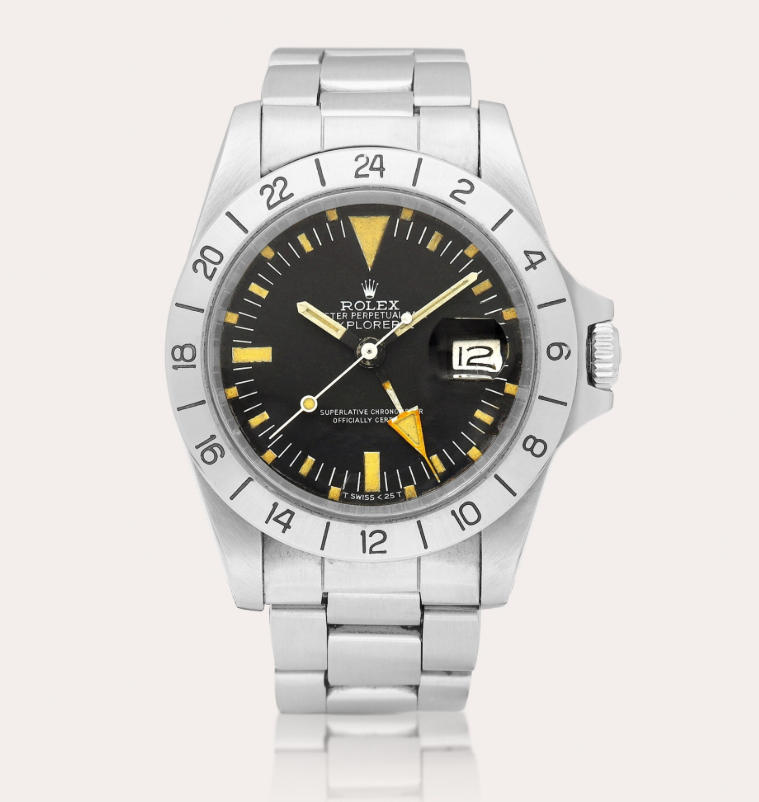
The first Explorer II, reference 1655, looks almost eccentric beside the versions that came later. Its steel case measured about 39mm, which gave it a substantial presence for the period, but it is the dial that really separates it from the modern family. The layout is busy, the luminous markers are arranged differently from the familiar Mercedes-hand Rolex sports watches, and the large orange 24-hour hand immediately dominates the face.
That orange hand is sometimes misunderstood. On the 1655 it could not be adjusted independently, so the watch was not a second-time-zone model in the way a modern Explorer II is. The conventional hour hand and the 24-hour hand moved together. One told the time on a twelve-hour scale, while the other showed the same time against the fixed 24-hour bezel, making it possible to distinguish afternoon from early morning when there was no daylight to help.
The watch went through a number of small dial, hand and bezel changes during its production life. Those variations matter greatly to collectors today, but they are not the most important part of the Explorer II story. What matters more is how different the original concept feels from what followed. The 1655 has a compact case, an unusually dense dial and a tool-watch character that Rolex never reproduced in quite the same way again.
This is why a Rolex Explorer II 1655 replica with period-correct proportions needs more than an orange hand and a steel bezel to look convincing. The scale of the 24-hour hand, the thickness of the bezel, the numeral style and the relationship between the hour markers all contribute to the slightly unconventional balance of the original watch. If those proportions are cleaned up too much, the result can actually look less accurate because the 1655 was never a particularly tidy design in the modern sense.
The character of the Explorer II changed significantly with reference 16550 in the 1980s. The case increased to 40mm, sapphire crystal replaced the earlier acrylic construction, and the 24-hour hand became independently adjustable. That last change altered the purpose of the watch. It could still indicate day and night, but it could now also display another time zone.
The dial evolved at the same time. Mercedes-style hands appeared, the hour markers became more familiar, and Rolex offered both black and white dials. The Explorer II was beginning to look less like a specialist instrument and more like a conventional Rolex sports watch, although the fixed steel bezel continued to separate it from the GMT Master line.
The later reference 16570 carried that formula forward for more than two decades. Rather than reinventing the model, Rolex gradually refined it. Different movement and luminous-material changes appeared during the production run, but the basic proportions remained reassuringly stable: a 40mm case, fixed 24-hour bezel, date at three o’clock and independent 24-hour hand.
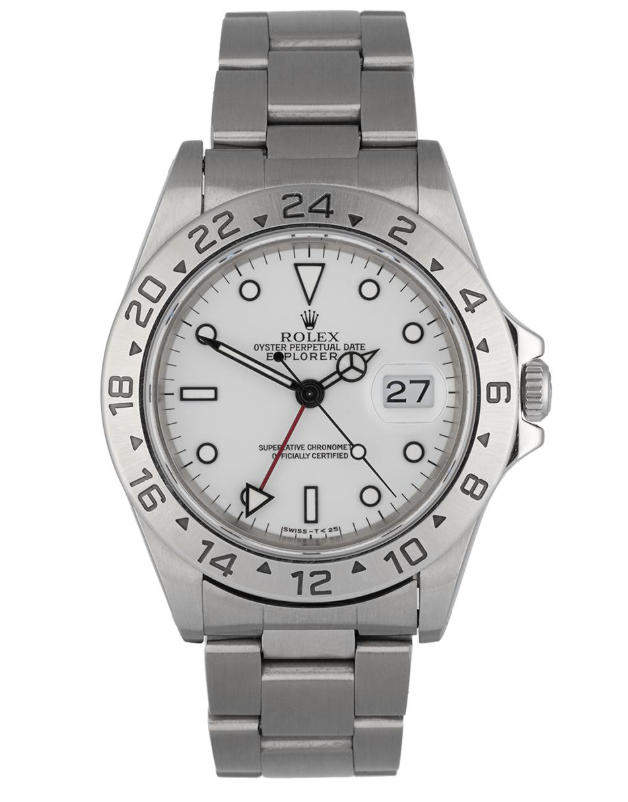
For many people, this generation represents the most restrained version of the Explorer II. The 40mm case wears noticeably smaller than the modern 42mm watches, and the white Polar dial in particular developed a very clear visual identity through its black-outlined hands and hour markers.
That balance is also useful when judging a Rolex Explorer II 16570 replica for everyday wear. A good comparison should go beyond the dial. The width of the bezel, the profile of the case, the shape of the crown guards and the way the bracelet meets the lugs all influence how the watch sits on the wrist. A replica can reproduce the basic white dial and red 24-hour hand yet still miss the compact feel that makes a 16570 recognisable.
Readers looking through our Rolex Explorer II articles will see why the 16570 remains such a useful reference point. It sits between two very different periods of the collection: the more eccentric early watches and the noticeably larger Explorer II models that arrived in the twenty-first century.
The Move to 42mm Changed the Character More Than the Numbers Suggest
Rolex made the biggest visual change to the Explorer II in years when the reference 216570 arrived in 2011. The case grew from 40mm to 42mm, the hour markers and hands became larger, and the orange 24-hour hand returned as an obvious visual connection to the original 1655.
On paper, an extra two millimetres does not sound dramatic. On the wrist, the difference is much more obvious. The 216570 feels broader and more contemporary, and there is more visual space across the dial. The Polar version takes particular advantage of this because the black surrounds around the hands and markers stand out strongly against the white surface, while the orange 24-hour hand becomes a clear focal point.
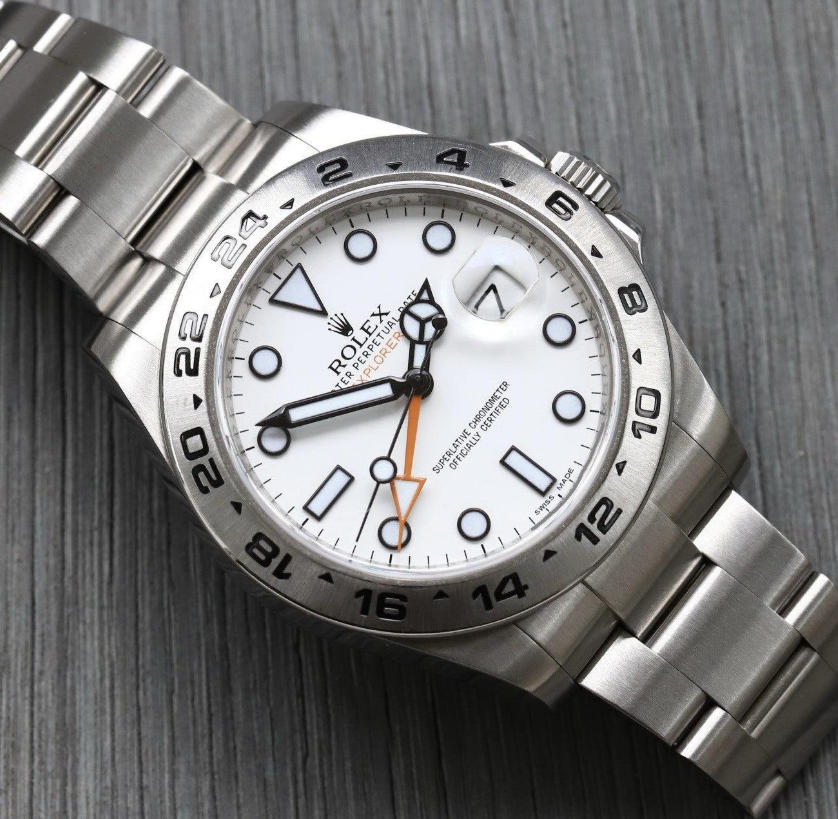
The change also divided opinion in a way the specification sheet cannot explain. Some people prefer the increased legibility and stronger presence of the 42mm case. Others find the earlier 40mm watches more naturally balanced. Both reactions make sense because the two sizes give the Explorer II noticeably different personalities even though the underlying design has barely changed.
Rolex refined that larger format again in 2021 with reference 226570. The diameter remained 42mm, so there was no dramatic visual reset. Instead, Rolex adjusted the proportions of the case and bracelet, refined the lugs and introduced calibre 3285.
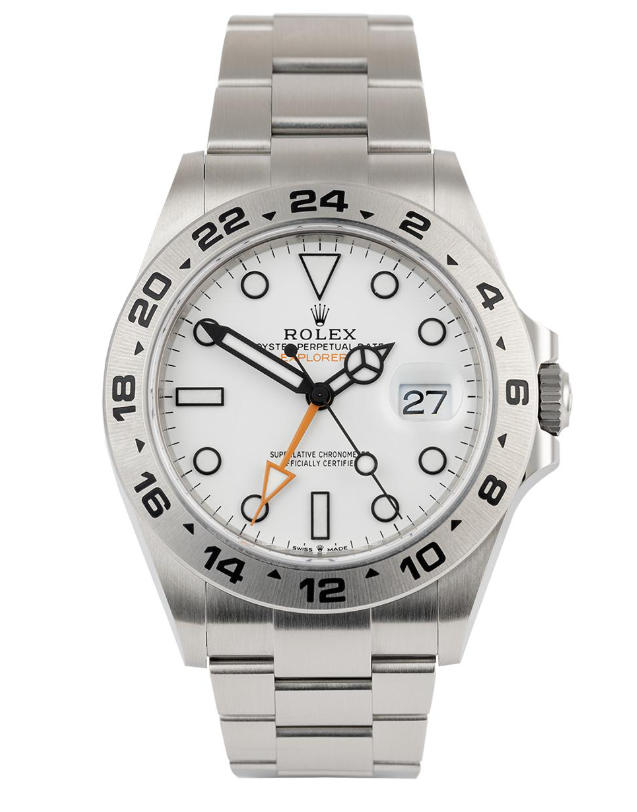
The difference between the 216570 and 226570 is therefore easier to appreciate when the watches are viewed together than when their specifications are read separately. The newer watch looks slightly more integrated through the case, bracelet and lug area. It is an example of the way Rolex often develops an established design: not by making every update obvious, but by changing the relationships between individual parts.
That makes the current generation a good test of how carefully a replica has been executed. With a modern Rolex Explorer II 226570 replica in the UK, correct dial colour is only the beginning. The fixed bezel should have the right visual weight, the orange 24-hour hand needs the correct length and shape, the case profile should not appear unnecessarily thick, and the bracelet needs to feel properly proportioned to the 42mm case.
The movement is another area where clear language matters. A genuine reference 226570 uses Rolex calibre 3285 and offers approximately 70 hours of power reserve. A replica movement may imitate certain functions or even the general appearance of that calibre, but it is not a Rolex-made 3285. Original Rolex movement construction, testing and certification should always be kept separate from claims made about replica watches.
This is one reason broad market terms are not especially helpful. Labels can change from one seller to another, while physical details remain easier to assess. Case dimensions, hand alignment, bezel engraving, bracelet construction and movement behaviour usually give a clearer picture of what a watch actually is.
The Explorer II Survived Because Rolex Never Turned It Into Another GMT Master
The modern Explorer II and GMT Master II can both display an additional time zone, which makes it tempting to see one as a simpler version of the other. In practice, they feel very different.
The GMT Master II is built around a rotating bezel and has long been associated with aviation and international travel. The Explorer II keeps its bezel fixed. That small mechanical difference completely changes the look and character of the watch. The engraved steel ring feels more like an extension of the case than a separate control, which keeps the model connected to its original role as a practical instrument.
It also explains why the Explorer II has never depended on dramatic materials or decorative changes to remain recognisable. A 1655 looks unmistakably like a watch from the 1970s. A 16570 is cleaner and more compact. A 216570 brings the design into a larger, more modern format, while the 226570 refines that format without changing its basic identity. Yet put all four together and the family resemblance is immediate.
That continuity is especially important when researching Rolex Explorer II replica watches for daily wear. The model name alone does not tell you enough. Someone looking at a 16570-style watch should expect different proportions from a 216570, while a modern 226570 should not simply be treated as the same 42mm case with a different movement.
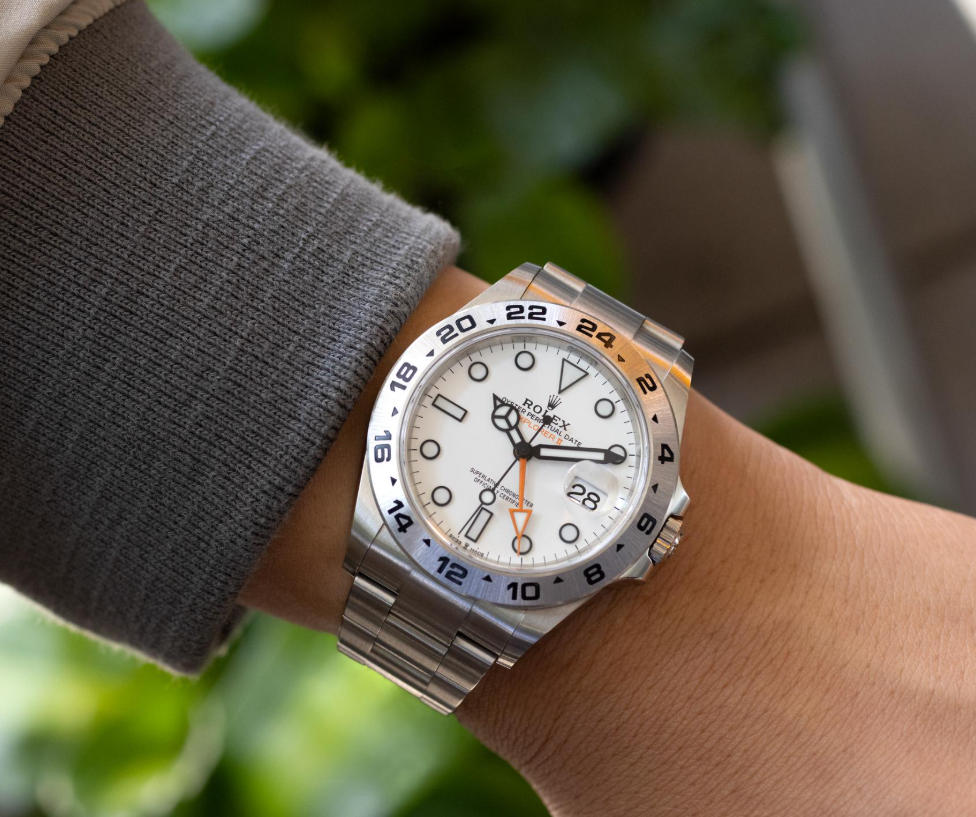
The original reference gives the comparison meaning. Once the genuine case proportions, hand shape, bezel layout, dial contrast and bracelet design are understood, it becomes much easier to spot where a replica follows the source closely and where compromises have been made.
That is also the most natural role for the Explorer II on The Comedy Pub. This is a UK site focused on replica Rolex watches, but useful replica coverage begins with understanding Rolex itself. Without that context, a comparison quickly becomes little more than a list of marketing claims. With it, even small details begin to make sense.
More than fifty years after the first Explorer II appeared, the watch remains one of the quieter members of the Rolex sports family. It has no rotating ceramic bezel, no precious-metal identity and no polished centre links demanding attention. Its personality still comes from a fixed steel bezel, an additional 24-hour hand and a dial designed to be understood quickly.
Rolex has changed the size, movement, hands, dial details and bracelet around those ideas many times. What it has not changed is the reason the Explorer II looks different from every other Rolex sports watch. That consistency, rather than any single reference or technical upgrade, is probably the best explanation for why the model still works.
The Comedy Pub is an independent UK website covering Rolex design and replica watch topics. It is not affiliated with, authorised by or endorsed by Rolex SA. Rolex and its model names remain trademarks of their respective owner.