
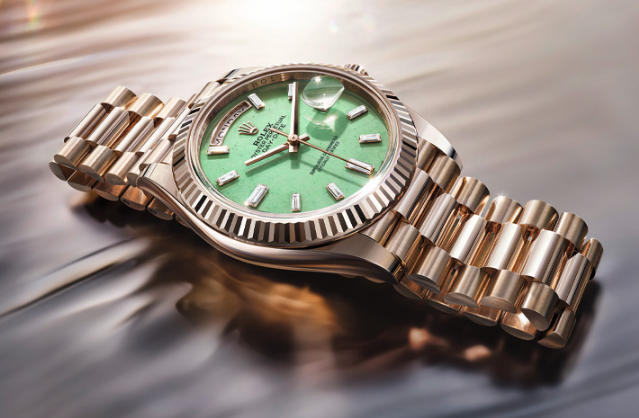
A higher price needs a specific explanation
When two replica Rolex watches look almost identical, the useful question is not which seller calls its version better. It is what the extra money changes: the way the watch fits, how its functions operate, the construction of its bracelet, or a detail you will actually notice.
A lower price can be sensible when it removes something you do not need. A higher price can be justified when it pays for a clearly identified improvement. Neither conclusion follows from the price alone.
To compare offers, separate three things: what changes, what stays the same, and what remains unverified. That simple distinction prevents a different dial, an unfamiliar grade name or a larger set of accessories from being mistaken for an improvement to the whole watch.
Compare the same watch before comparing the price
“Datejust versus Datejust” is not a sufficiently precise comparison. Record the case size, dial and marker style, bezel, bracelet, movement option and version described in each offer. Do the equivalent for a Submariner, GMT-Master II or Daytona replica.
Otherwise, several differences become bundled together. One offer may use a different bracelet configuration while another highlights a movement upgrade. Without separating those changes, there is no clear way to decide what the additional charge buys.
Use one line for each option: model reference or design, case size, dial, bezel, bracelet, movement, version, delivered price. Mark a missing answer as unknown rather than assuming it matches the other offer.
A Rolex-focused catalog such as BestRolex.io provides a starting point for organizing a shortlist by model family, with comparison and price guides alongside the collections. Return to the exact configuration when comparing offers: a category name is not a specification for every watch within it.
Ask what an upgrade changes when you use the watch
Movement: identify the behavior, not just the label
When a seller attributes a price difference to the movement, ask for its identification and an explanation of the functional difference. “Upgraded automatic” does not tell you which feature operates differently or what support is available.
For a Datejust replica, request a demonstration of winding, time setting and date operation according to that version’s instructions. A clear photograph of one date is useful for appearance, but it does not demonstrate the date mechanism.
For a GMT replica, ask which hour display adjusts independently and how that adjustment works. For a Daytona replica, establish which subdials function and request a demonstration of timing, stopping and resetting. Do not assume the controls reproduce the genuine reference’s operation.
The buying question is then straightforward: will you use that difference? Someone who needs convenient second-time-zone adjustment has a different reason to pay more from someone choosing mainly by dial appearance. Mechanical complexity is not automatically a benefit for both.
Bracelet and clasp: look beyond the outside photograph
An upgrade described as a better bracelet should identify the changed part. Ask whether the difference concerns the links, end links, adjustment arrangement, clasp construction or simply the finish. These are separate features.
Request photographs of the bracelet underside, end-link junction and open clasp. A brief closing and adjustment demonstration adds information that a static photograph cannot provide. Ask how the bracelet will be sized and which parts are included.
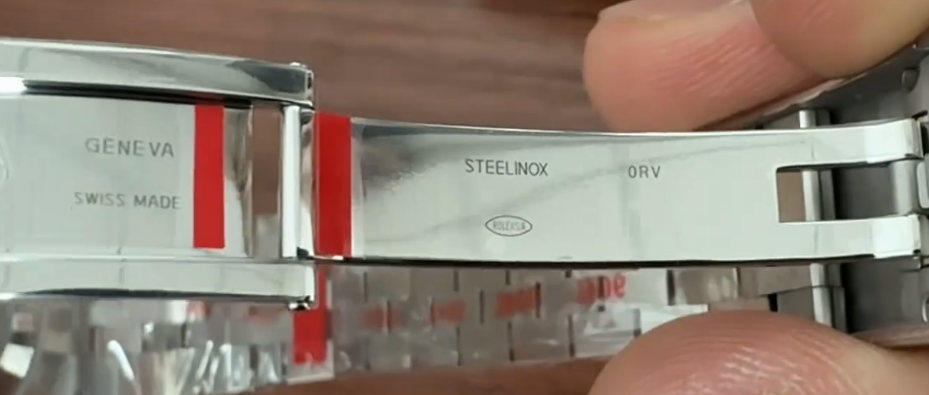
In the photograph, the open blades and hinge are visible alongside engraved markings. That is useful visual evidence, but an engraving is not independent verification of material composition or manufacturing origin. A photograph should answer the question it can actually resolve.
Finishing: decide which visible difference matters
For appearance-focused comparisons, ask for similar angles and lighting. With a Datejust-style design, examine the bezel, dial printing and transitions between polished and brushed surfaces. With a Submariner-style design, include a straight-on bezel view and a profile photograph.
These views help you compare the result, not establish an unseen production process. A more reflective photograph does not by itself identify a different coating or alloy. If an upgrade is sold on a material claim, request a precise description rather than inferring it from shine.
A visible change can still be worth paying for. The point is to choose it because you prefer that particular detail, not because one improved detail is presented as proof that every component is superior.
Match the evidence to the claim
Evidence becomes useful when it answers a defined question. Asking for more pictures is less effective than asking for the view, demonstration or record that addresses the proposed upgrade.
| Claim | Useful evidence | What it does not establish |
|---|---|---|
| More accurate-looking dial or bezel | Comparable close-ups of the identified versions. | Movement reliability or the condition of internal seals. |
| Different movement or functions | Movement identification and a demonstration of the relevant operation. | A guarantee of long-term performance or easy local repair. |
| Improved bracelet or clasp | Identification of the changed components, open-clasp views and an adjustment demonstration. | How comfortable the watch will feel on your wrist. |
| Tested water resistance | A dated result identifying the watch and the test conditions. | Suitability for every water activity or automatic water-damage coverage. |
Give special attention to photographs from different versions or dates. They may explain a design change without showing the item currently offered. Establish whether you are looking at an illustration, a sample or the actual watch allocated to an order.
An example: when the less expensive option makes sense
Consider two hypothetical Datejust replica offers with the same case size, dial, bezel style and bracelet configuration. These are illustrative offers, not tested products or current listings.
Option A identifies its movement and includes a demonstration of its functions. Option B costs more and provides comparable photographs showing a bezel finish you prefer. Both describe the same bracelet arrangement, and neither supplies an individual water-resistance result.
For a buyer who particularly values that bezel finish, B may justify the additional cost. For a buyer satisfied with A’s appearance, A may be the more suitable choice. There is no basis in this example to conclude that B also has a better bracelet, greater water resistance or longer service life.
Now change the example: B costs more, but the only difference supplied is the phrase “highest grade.” The upgrade is no longer explained. Request the missing information; do not turn the higher price itself into evidence.
Separate the purchase price from the ownership questions
When comparing cheap replica Rolex watches with more expensive alternatives, keep known costs separate from possible expenses. Record the quoted delivery charge and any confirmed sizing or inspection charge. Do not invent a future repair allowance and treat it as a predictable bill.
Before choosing a mechanically complex version, establish who would assess a problem, whether they work on that movement and what the seller’s written terms actually cover. A general promise of support is not the same as an identified repair arrangement.
For a US buyer, also confirm the dispatch location and return instructions rather than inferring them from a dollar price or a US-facing webpage. Compare the written conditions of the offers, not assumptions about where a business operates.
Likewise, do not justify a replica’s price using the resale history of the genuine Rolex reference. The replica is a different product, not a genuine watch purchased at a discount.
A useful decision rule
Before accepting a higher quote, finish this sentence: “The additional cost buys this specific change, I have this evidence for it, and it matters because I will use or notice it.”
If you cannot complete the sentence, the comparison is unfinished. That does not prove the upgrade is worthless; it shows which answer you still need. Once the difference is clear, choose according to your own priorities rather than treating the most expensive version as the default.
Questions about replica Rolex price differences
Does a super clone label explain a higher price?
The label alone does not identify the changed components. Ask for the movement, configuration, functional differences and supporting evidence for that exact version. Compare those details with the alternative, not just the two grade names.
Can quality-control photographs replace a functional check?
No. Photographs can help compare appearance and configuration. Request a demonstration for a claim about operation, and a relevant test record for a measured-performance claim. Each answers a different question.
Should every buyer choose the same upgrade?
No. An appearance change, a different adjustment method and a more complex movement solve different preferences. A useful upgrade is one you can identify, substantiate and connect to how you intend to wear the watch.